Rent and bills
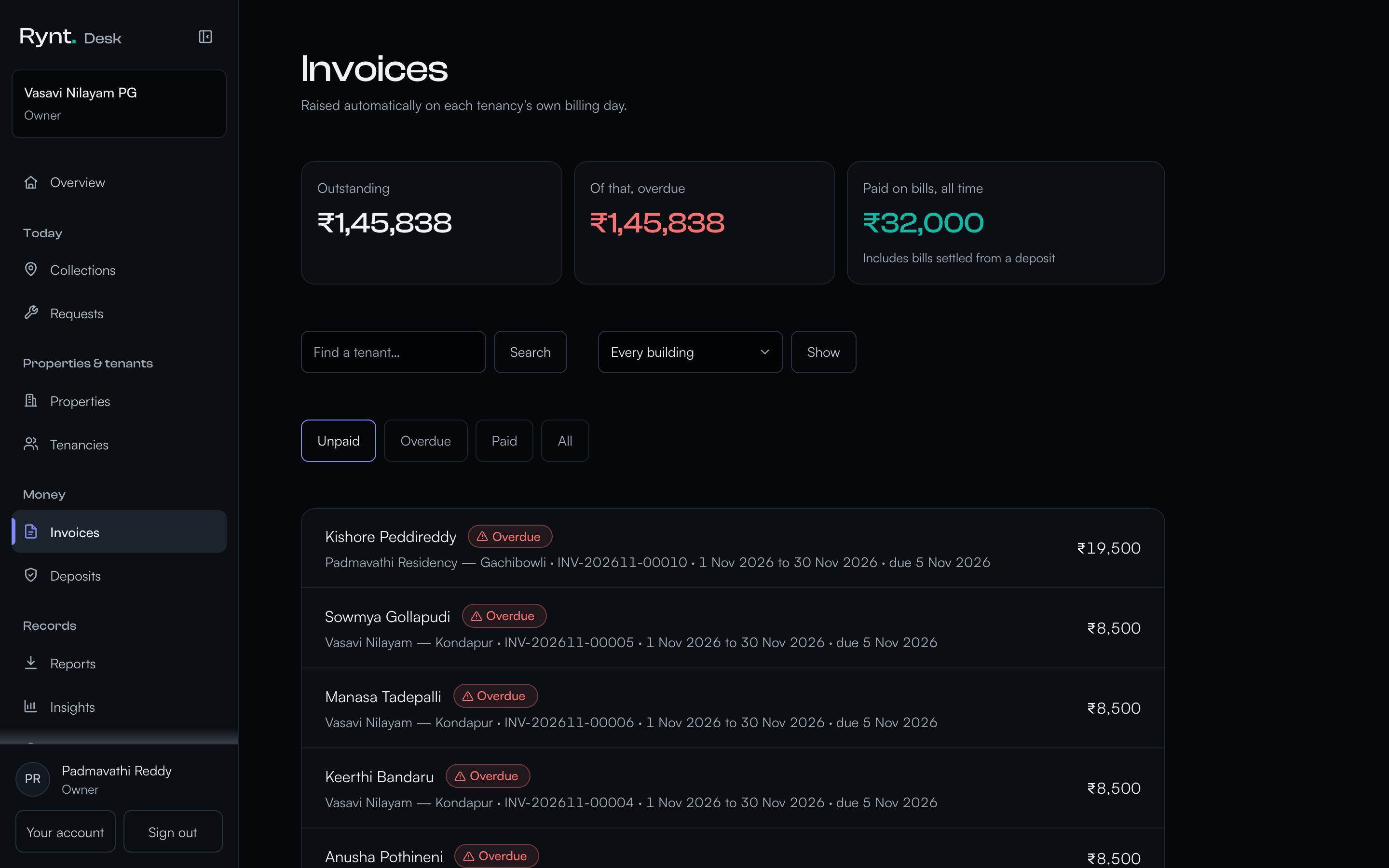
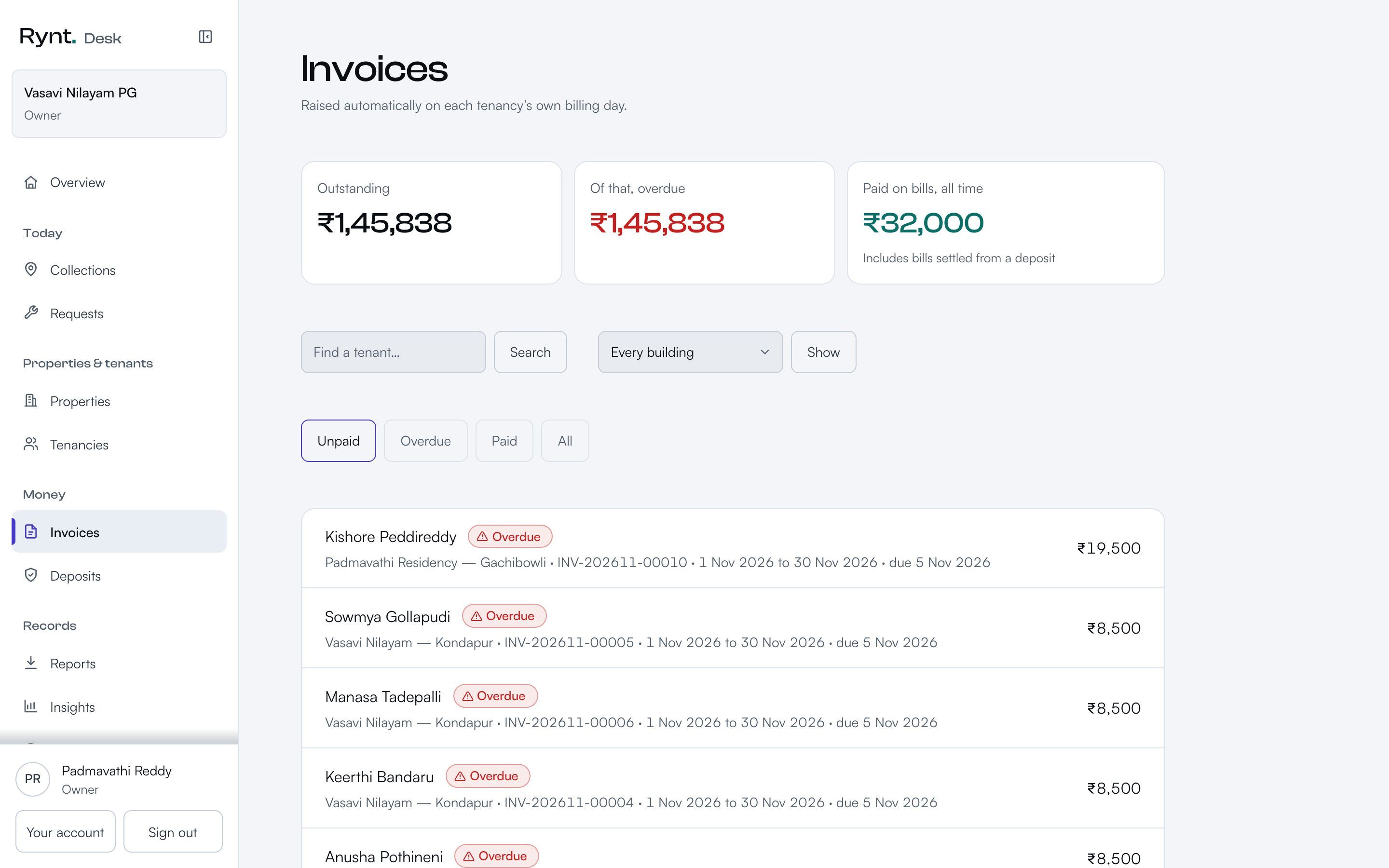
Bills that raise themselves. Worked out to the day, every month.
Every tenant’s bill goes out on their billing day, by itself. Someone moving in mid-month pays only for the days they lived there.
Example data
What Rynt does with rent
Three ways to bill
On the 1st, on a fixed date, or on each tenant’s move-in day. Set per building, or for one tenant.
A first month by the day
Move in on the 11th and the first bill runs from the 11th to month-end.
Rent changes kept
A new rent starts from its date. Old bills keep their old rent, so a reprint reads exactly as before.
One-off bills
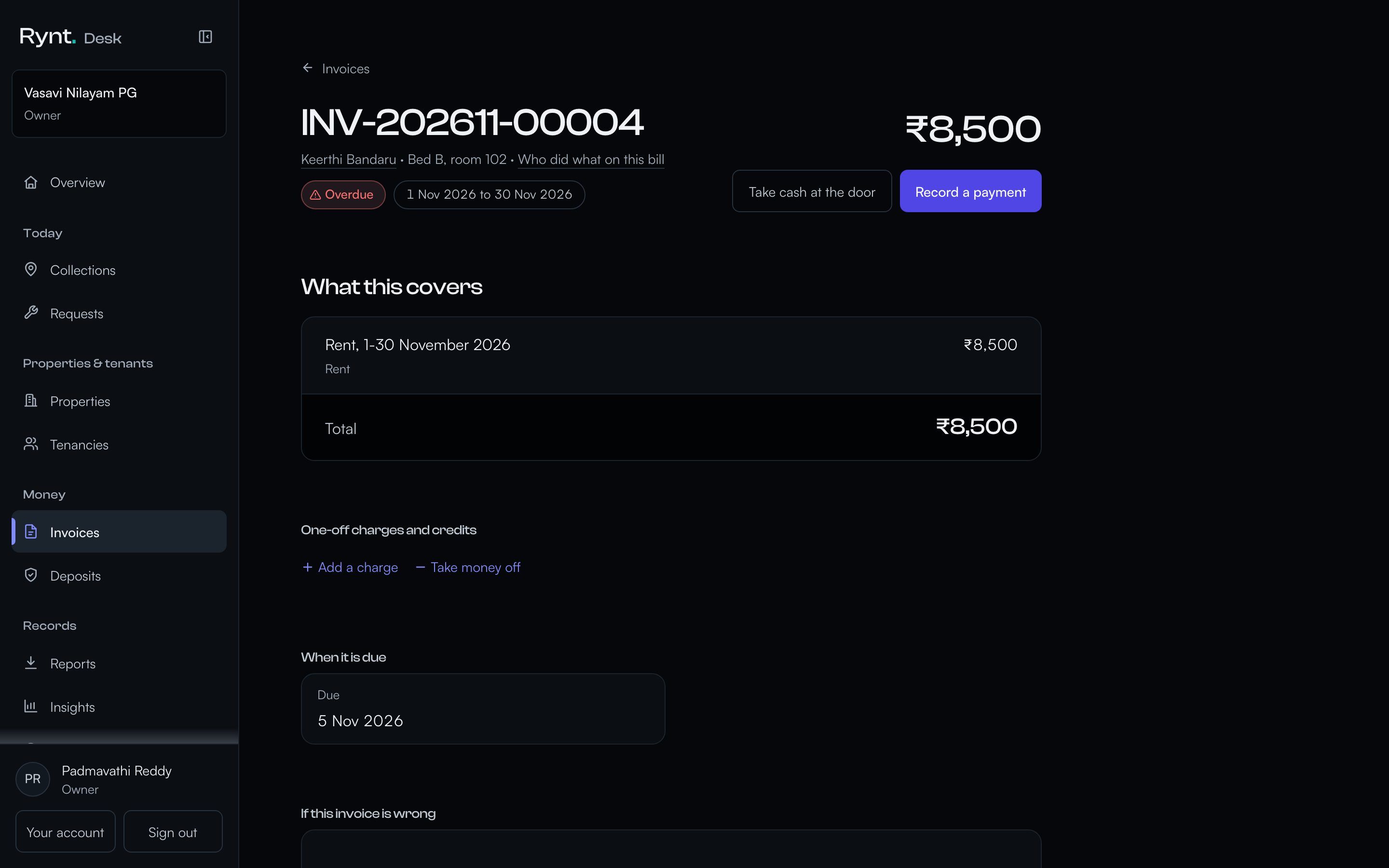
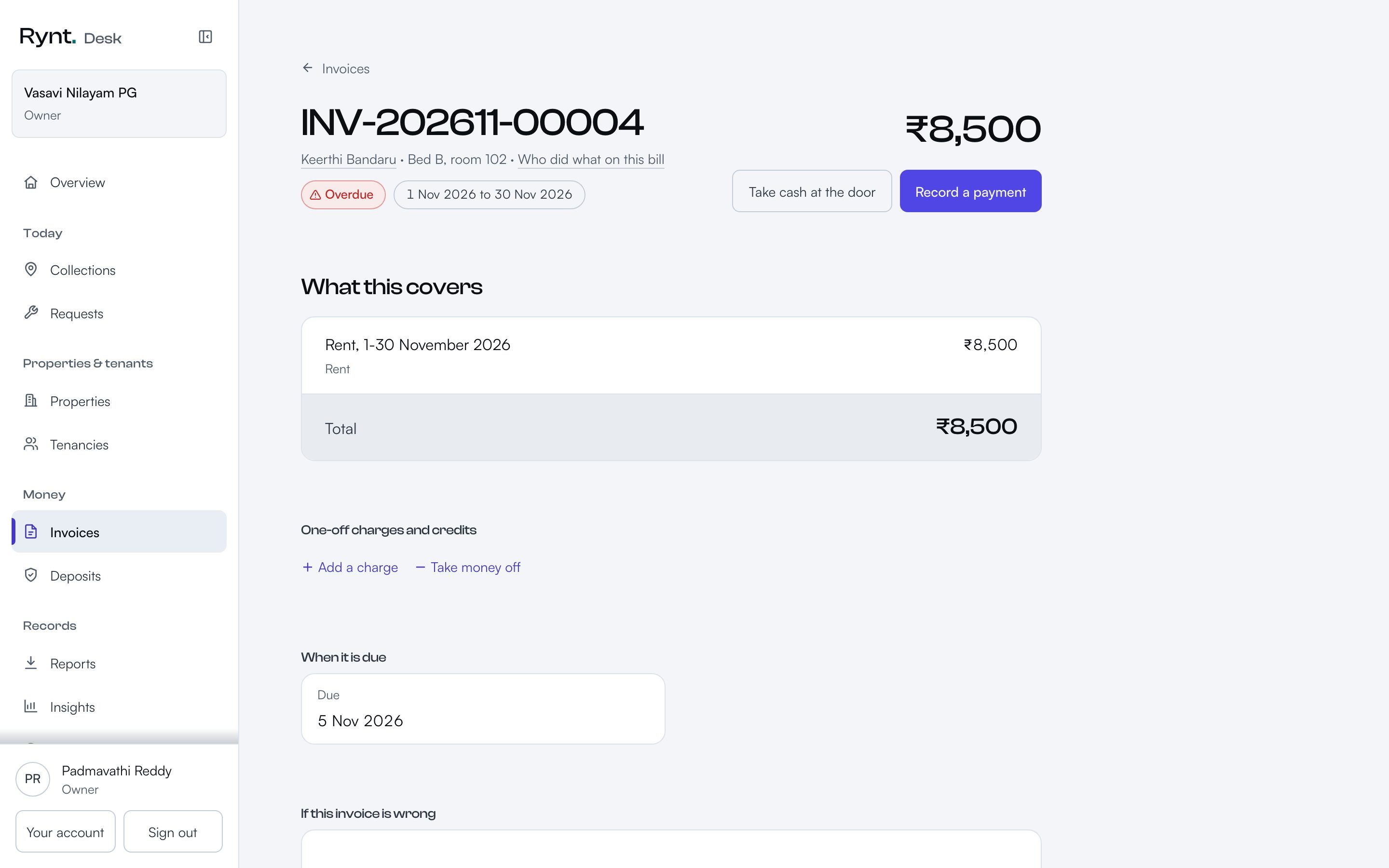
A broken geyser or a guest’s stay, on its own bill with your reason.
Rent paid ahead
Record it once. Rynt fills the next bills oldest first, as many as it reaches; the last may be part-paid.
A first bill, worked out for the days lived
The later the move-in date in December, the smaller the first bill. Example figures.
Rent of ₹9,000 a month, in December 2026 (31 days)
| Moves in | Days lived | First bill |
|---|---|---|
| 1 December | 31 | ₹9,000 |
| 11 December | 21 | ₹6,096.77 |
| 21 December | 11 | ₹3,193.54 |
Example data
Late fees only if you want them
Rynt adds no late fee. If you choose to charge one, you set the amount and the days of grace, and can waive it on any bill. Unpaid rent shows as overdue either way.
Example data
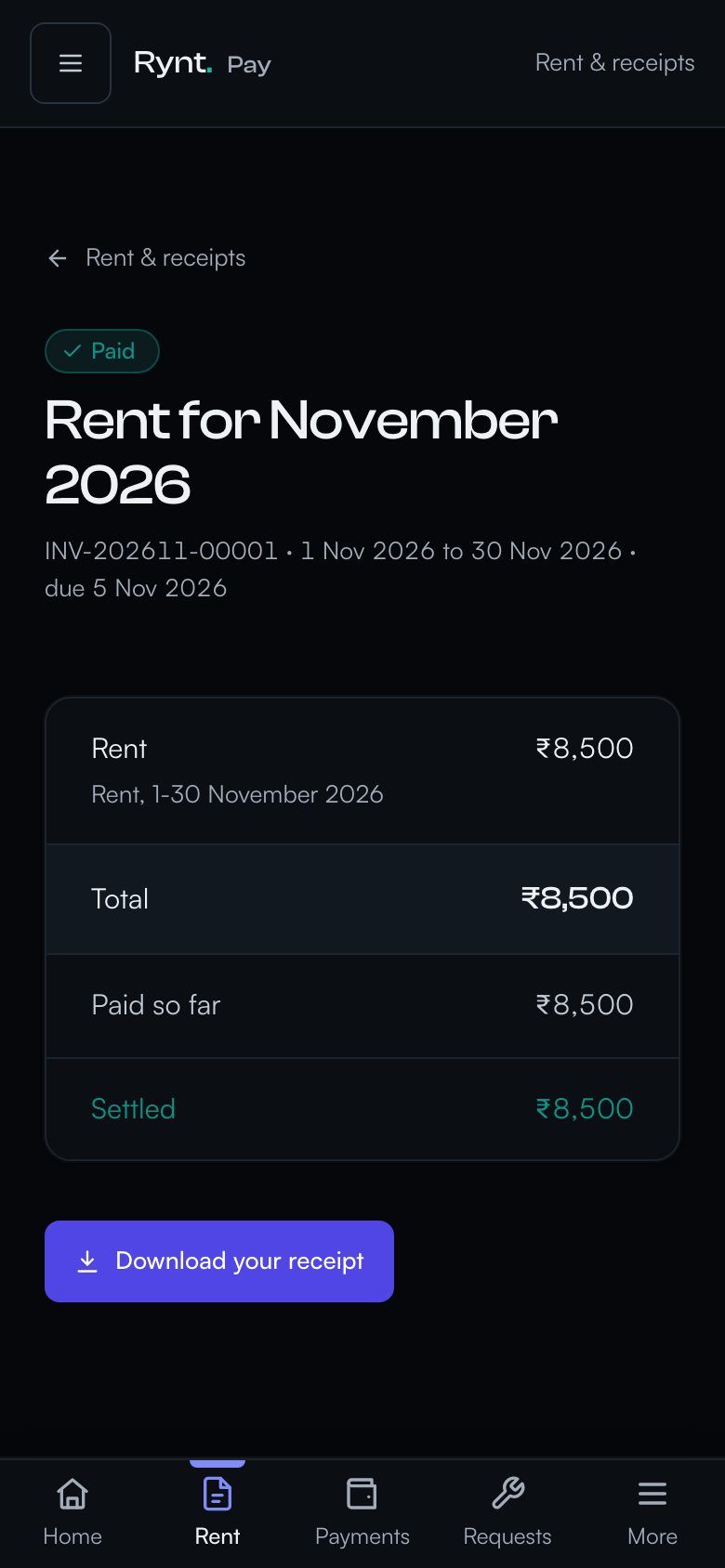
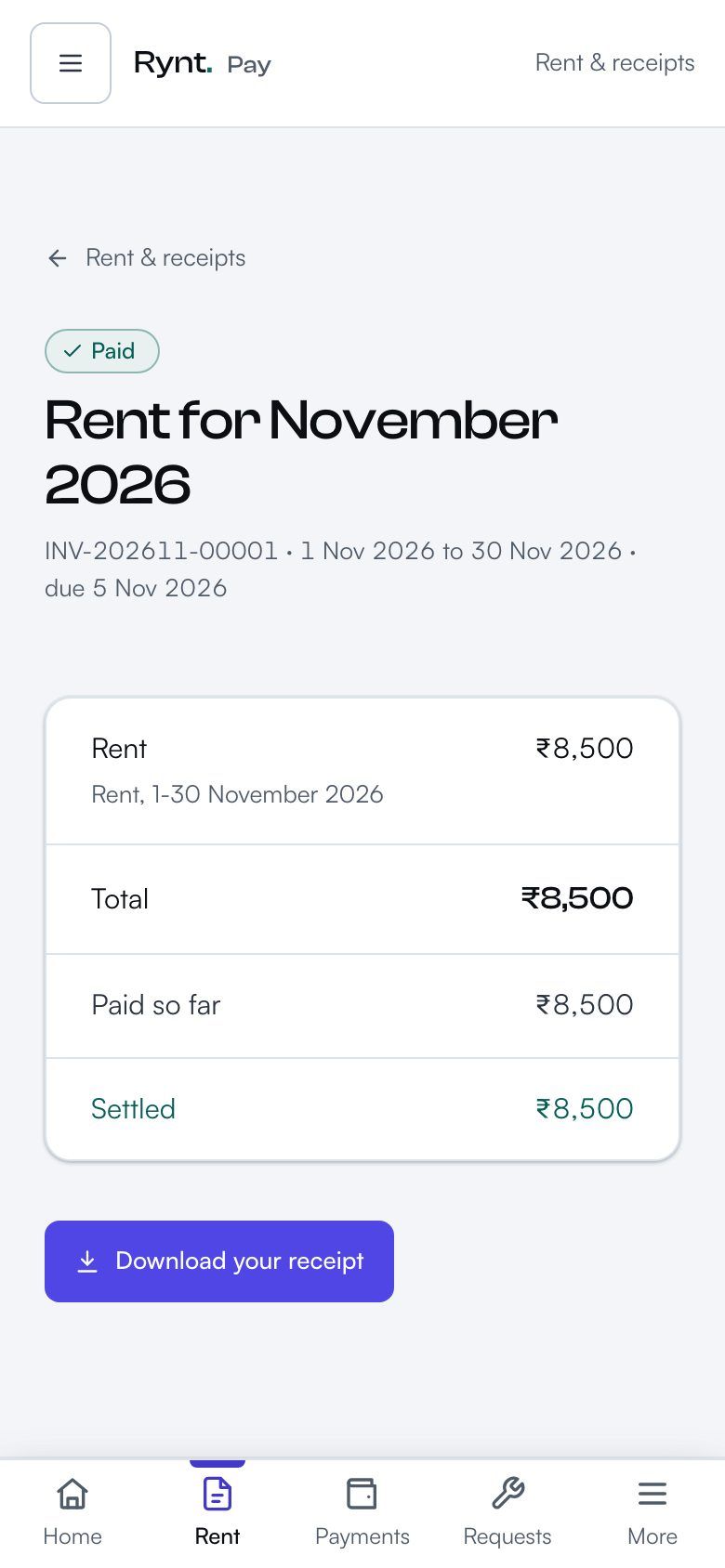
Bills that read the same for everyone
Your tenant sees each bill line for line as you do, named by its month, such as December 2026.
Example data
Questions owners ask
What if a bill goes out by mistake?
Cancel it. It stays on record as cancelled, and nothing is owed on it.
Let month-end take care of itself.
Free during early access. We’ll set up your account personally.